Cheap weight bench with rack: which combo sets actually work
A bench with built-in uprights is the cheapest way to start pressing a barbell at home. It is also the category with the widest gap between what a listing promises and what the frame will take.
Updated August 2026 · By Stephen V.
A bench with integrated uprights is the single cheapest way to get a barbell off the floor and onto your chest. For roughly the price of one decent adjustable bench you get a bench, a set of J-hooks, and usually a leg developer bolted to the end. For a beginner with a bar and a hundred pounds of plates, that is a complete pressing setup for about $110.
It is also the category where the marketing gets furthest ahead of the metal. "900 lb capacity" on a combo set means the bench pad frame, not the uprights, and never means you should be pressing anything close to it. The honest way to shop here is to work out where the combo set stops making sense for you — and then buy the one that gets you comfortably to that point. Here are the three we would buy, and the ceiling on each.
The short answer
In a hurry? These are the picks we'd buy. Prices are live; tap a card below for the full reasoning.
$269.997% offPrice as of September 14, 2026·#addisclosure
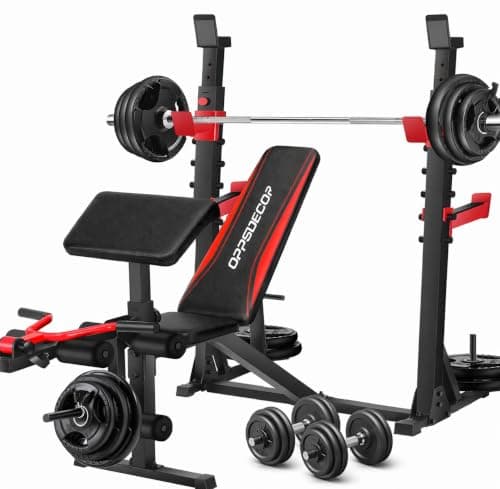
OPPSDECOR 900 lb Bench Set with Squat Rack
The one to buy if you already know you will outgrow an entry-level frame — a heavier station with squat uprights and a certified frame rating.
Type
Bench + squat rack + leg extension
Frame rating
900 lb (mfr, ASTM-certified)
Extras
Preacher curl pad, leg developer
Best for
Heavier pressing and squatting
Pros
Separate squat uprights mean you can squat as well as press
Certified frame rating is a meaningfully better claim than a bare number
Preacher pad and leg developer replace two separate purchases
Cons
More than double the price of the entry-level sets
Big footprint that does not fold away
Assembly is a long job with a lot of hardware
Best for: anyone who plans to press real weight.
Skip this
The budget traps that look cheap and cost you twice. We'd skip these.
Pressing to failure on any combo set without safeties
Almost every bench-and-rack combo in this price band has J-hooks and no safety catches. That means there is nothing to catch the bar if you fail a rep, and the only exits are rolling the bar down your body or tipping it off one side. Leave a rep in the tank, or press with dumbbells when you want to go to failure. Our solo-lifting guide covers this properly.
Buying a combo set when you already own a rack
If you have a squat rack or power rack, the uprights on a combo set are dead weight and dead money — a plain adjustable bench will be sturdier, cheaper and better shaped for pressing. Combo sets are for people whose alternative is no rack at all.
How to choose (and what to skip)
Understand what the capacity number covers
A quoted capacity on a combo set is almost always the bench frame with a static load spread across it, not the uprights holding a loaded barbell while you press dynamically. Treat the number as an indication of build class rather than a limit you can approach. A certified rating, where a manufacturer states a test standard, is a stronger claim than a bare number.
Check the upright height range against your body
The most common complaint with combo sets is that the lowest upright setting is still too high to unrack comfortably, or the highest is too low to re-rack from a full press. Compare the stated height range against your own arm length before you buy — it is the specification that decides whether the set is pleasant or annoying to use.
Folding versus fixed
Folding sets are the reason many people buy this category: a whole pressing station that goes away between sessions. The trade is flex. Every hinge is a place the frame can move under load. If the set lives permanently in a garage, buy the fixed frame; if it has to fold into a wardrobe, accept the flex and keep the loads modest.
Leg developers are a bonus, not a reason
The leg extension and curl attachment on these sets is genuinely useful for accessory work and genuinely not a substitute for squats. Take it as a free extra if the set you want has it. Do not pay a premium for it, and check what size plates its post takes — some are standard 1-inch even when the rest of your gym is Olympic.
Know your exit point
A combo set is a stepping stone. Most people outgrow the uprights before the bench pad, usually somewhere around a bodyweight bench press. Plan for that: either buy the heavier station up front, or buy the cheap one knowing you will replace the uprights with a real rack and keep the bench. Both are reasonable budget strategies.
Combo set or bench plus rack?
The honest comparison is this. A combo set gets you pressing today for the least money and the least floor space. A separate adjustable bench and a squat stand costs somewhat more, takes more room, and is better in every way that matters once the weight goes up — sturdier uprights, real safety options, and a bench you keep when the rack changes.
This is the part that deserves more attention than it gets. Benching alone on uprights with no catch bars means a failed rep has no good outcome. The practical rules: never take a set to true failure, keep one rep in reserve on every working set, and do not use collars when benching alone — an uncollared bar lets you tip the plates off one end if you get pinned. If you want to press to failure, do it with dumbbells, where you can simply drop them.
Combo sets ship as a large bag of steel and a smaller bag of bolts. Two habits make them much better: assemble everything loosely first and only torque down once the whole frame is square, and re-tighten every bolt after the first two weeks of use. Almost every "this thing wobbles" complaint in this category is a frame that was tightened out of square or never re-torqued.
Put something under it, too. A rubber-top tile or a section of stall mat stops the feet marking the floor and takes the rattle out of re-racking — see our budget flooring roundup.
Frequently asked questions
Are cheap bench and rack combo sets safe?+
They are safe within their limits, which are lower than the headline numbers suggest. The uprights, not the bench pad, are the real constraint, and almost none of these sets have safety catches. Used sensibly — moderate loads, never pressing to failure, no collars when benching alone — they are a reasonable starter station. Used like a power rack, they are not.
What does a 900 lb capacity actually mean on a bench set?+
It is normally a static rating for the bench frame, measured with the load spread across it, not a rating for the uprights holding a barbell while you press. Treat it as a rough indicator of how heavily built the frame is, not a load you should approach. A rating that names a test standard is a more meaningful claim than a bare number.
Should I buy a combo set or a squat rack and a separate bench?+
Buy the combo set if the alternative is no rack at all, your budget is tight and your space is small. Buy a separate rack and bench if you can stretch, because the uprights will be sturdier, you get real safety options, and the bench survives every future upgrade. Most people who stay with lifting end up on the second path.
Can I squat on a bench and rack combo?+
Only on the taller sets that include full squat uprights, and even then without safeties. On the standard bench-height combo sets the uprights are set for pressing and are far too low to unrack a squat from. If squatting matters to you, buy a squat stand or a power rack instead.
Prices and availability shown here come from Amazon's live data and change often; we re-verify them regularly. Bar Bumper is an Amazon Associate and earns a commission on qualifying purchases at no extra cost to you. Read our full disclosure.