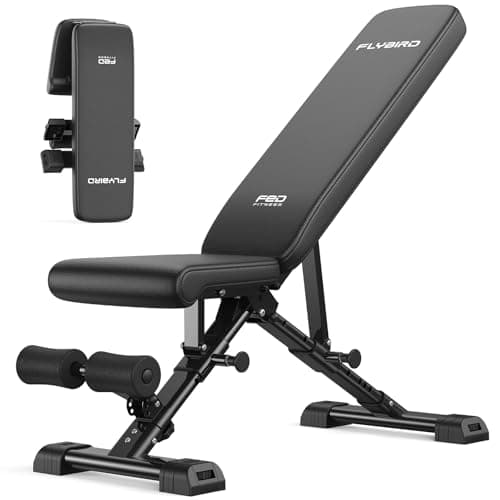
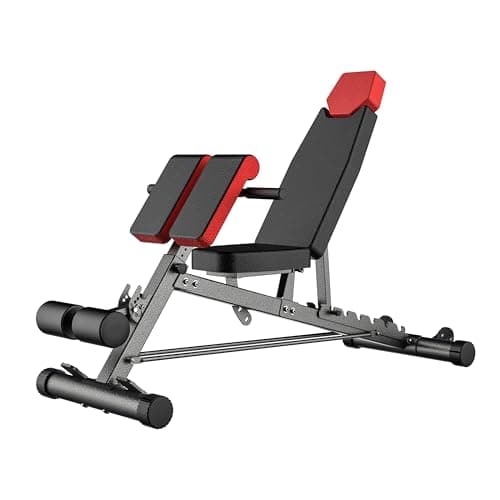
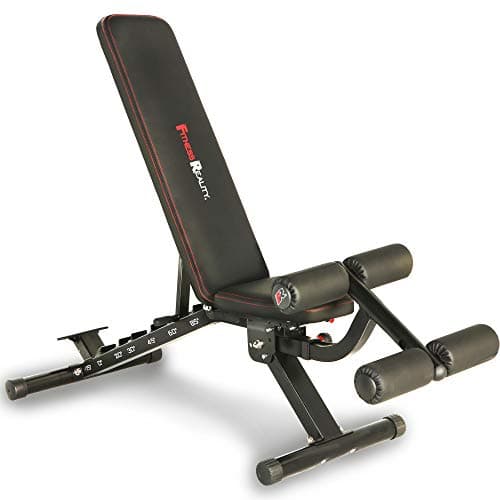
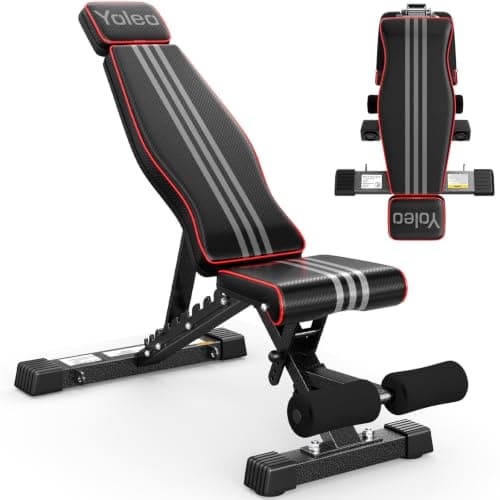
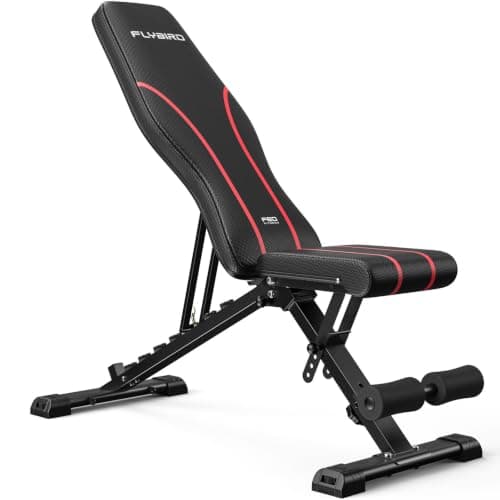
An adjustable bench turns one barbell into a full upper-body gym. Here are the sub-$250 ones that stay planted under a real press.
Updated July 2026 · By Stephen V.
An adjustable bench is the cheapest way to multiply what a barbell and a pair of dumbbells can do: flat press, incline press, seated shoulder press, decline work, supported rows and step-ups all come from the same $100-250 purchase. It's also the piece where budget shopping goes wrong most often, because the two things that matter — rated capacity and the pad gap between seat and back — are buried in the spec list while the photos all look identical. Here are five we'd actually lie down under, with the checks that separate them.
The short answer
In a hurry? These are the picks we'd buy. Prices are live; tap a card below for the full reasoning.
The budget floor for a real adjustable bench — light, foldable and honest about its limits.
Type
Adjustable bench
Positions
Multiple incline
Storage
Folds upright
Weight
Light, easy to move
Pros
Cheapest adjustable bench we'd put a barbell over
Light enough to move and store daily
Same folding design as the pricier model
Cons
Lower capacity than the top picks
Narrow pad on the flat setting
Best kept to dumbbell and moderate barbell work
Best for: tight budgets and small rooms.
Skip this
The budget traps that look cheap and cost you twice. We'd skip these.
Benches with no published weight capacity
Capacity is the one number that tells you whether the frame was engineered or copied. A bench that doesn't publish one — or publishes 'user weight' without including the bar — is a bench you shouldn't put a loaded barbell over.
Ultra-light folding benches for barbell pressing
Sub-25 lb benches are built for dumbbell circuits, and they flex and shift the moment you unrack a barbell over them. If you own a rack and intend to bench in it, buy the heavier frame; the extra $40 buys the stability you need every rep.
How to choose (and what to skip)
Rated capacity includes you plus the bar
The published figure has to cover your bodyweight and the loaded barbell. A 600 lb rating sounds enormous until you notice a 200 lb lifter pressing 225 lb is already at 425 lb before any safety margin. Look for 700 lb or more if you intend to press seriously.
Mind the pad gap
Almost every budget FID bench has a gap between the seat pad and the back pad, because the back has to rotate. A gap wider than about two inches sits right under your lower back on flat presses and is the most common complaint on cheap benches. Check the flat-position photo before you buy.
Pad width and height
A 10-inch pad is stable for pressing but digs into wider shoulders; 12 inches is more comfortable but crowds your shoulder blades on flyes. Bench height matters too — if your feet don't plant flat on the floor, you lose the leg drive that stabilizes a heavy press.
Ladder vs pop-pin adjustment
Ladder-style adjustment (lifting the back onto a notched bracket) is cheaper and completely reliable, but you have to get up to change it. Pop-pin adjustment is faster and usually found higher up the price range. Neither is unsafe; it's purely convenience.
Decline is worth having, hold-downs more so
Decline positions cost almost nothing to include and add decline press and weighted sit-ups. But decline is only usable with leg hold-downs, so check for those rather than for the angle. A bench with decline and no hold-down has a setting you'll never use.
What an adjustable bench adds over a flat one
A flat bench does one job extremely well for about half the money. An adjustable bench adds incline pressing (the upper-chest and shoulder angle a flat press misses), seated overhead pressing with back support, incline dumbbell curls, supported rows, and — with hold-downs — decline work. For most home gyms that's four or five extra exercises for an extra $50-100.
The trade-off is real, though: a flat bench of the same price is always more stable, because it has no moving joint. If you only ever bench and your budget is genuinely tight, the flat bench is the better buy. We put the two head to head in flat vs adjustable.
The wobble test, and how to fix it
Most reported bench wobble is fixable. In order: re-tighten every bolt after the first week (frames settle), check the floor is level and shim a foot if it isn't, replace worn foot caps, and put the bench on a rubber mat rather than a slick floor. What you can't fix is a frame that flexes in the middle under load — that's a design limit, and it's why the rated capacity number matters more than the price.
Bench and rack: get the heights right
If you plan to bench inside a power rack, check two dimensions before you buy: the bench height (so the bar clears your chest when racked on the lowest J-hooks) and the bench length versus the rack's internal depth. Budget benches vary from about 16 to 20 inches tall, and a tall bench in a short rack means you can't set the safeties low enough to catch a failed rep.
If you're buying both at once, our under-$500 build pairs a rack and bench that work together, with live prices for the whole set.
How long does a cheap bench last?
The frame effectively never fails within its rating — it's welded steel. What wears out is the upholstery: vinyl splits at the seams from sweat and sun, usually somewhere between two and five years in a garage. That's not a disaster (a replacement pad or a strip of gym vinyl and a staple gun is a cheap fix), but it is the reason to keep a bench out of direct sunlight and wipe it down after sessions.
Pad width, and why 10 inches is the number
Bench pads cluster around 10 inches wide for a reason: it's wide enough to support your torso under a heavy press and narrow enough to let your shoulder blades retract off the edges. Wider pads (12 inches and up) feel more comfortable lying down and quietly limit how far you can pull your shoulders back, which is the position that keeps a bench press safe for your shoulders.
Firmness matters as much as width. A thick, soft pad compresses under load, so your shoulders sink and the platform you're pressing from moves. Firm and slightly thin is the right compromise for barbell work; save the plush padding for a bench you'll mostly use for dumbbell curls. And check pad length too — a backrest shorter than about 28 inches leaves taller lifters with their head unsupported at the top of an incline.
Assembly notes that save a wobbly bench
Nearly every budget bench arrives in five or six pieces, and the assembly order decides how solid it feels. Build the frame with every bolt finger-tight first, sit the bench on a flat floor, then torque everything down in a criss-cross pattern rather than one side at a time — that lets the frame settle square instead of locking in a twist. Re-tighten after the first week and again after a month; almost every "my bench wobbles" complaint disappears at that point. If it still rocks, check the foot caps: a missing or worn rubber cap on one leg is a common and two-dollar cause.
Finally, put the bench on rubber rather than a bare slab or a wood floor. A mat stops the feet skating when you drive through your legs on a press, protects the floor from the frame's edges, and takes some of the ring out of a dropped dumbbell. It's the cheapest thing on this page and it makes the bench feel like a more expensive one.
Frequently asked questions
What weight capacity do I need on a home gym bench?+
Add your bodyweight to the heaviest bar you plan to press, then leave a real margin. A 200 lb lifter pressing 225 lb is already loading 425 lb, so a 700-800 lb rating is a sensible target for barbell work. For dumbbell-only training, lower ratings are fine.
Are cheap adjustable benches safe for barbell bench press?+
The better ones are, provided you check the rating covers you plus the bar and you bench inside a rack with the safeties set. What isn't safe is pressing a loaded barbell over an ultra-light folding bench designed for dumbbell circuits.
Is the gap between the seat and back pad a problem?+
It's the most common complaint on budget FID benches. A small gap is unavoidable because the back pad has to rotate; a large one sits under your lower back on flat presses and gets uncomfortable. Check the flat-position photo and prefer benches where the pads nearly meet.
Flat or adjustable bench for a first home gym?+
Adjustable, if the budget stretches — incline pressing and seated overhead work are worth the extra $50-100. Flat, if it doesn't: a stable flat bench beats a wobbly adjustable one every time, and you can upgrade later.
Prices and availability shown here come from Amazon's live data and change often; we re-verify them regularly. Bar Bumper is an Amazon Associate and earns a commission on qualifying purchases at no extra cost to you. Read our full disclosure.